










Organizations trust Apromore to provide data for decisions that improve operations and customer experience while reducing risk. Apromore's advanced, easy-to-use capabilities show a complete picture by mapping workflows across any application or system.
Why Process Mining?
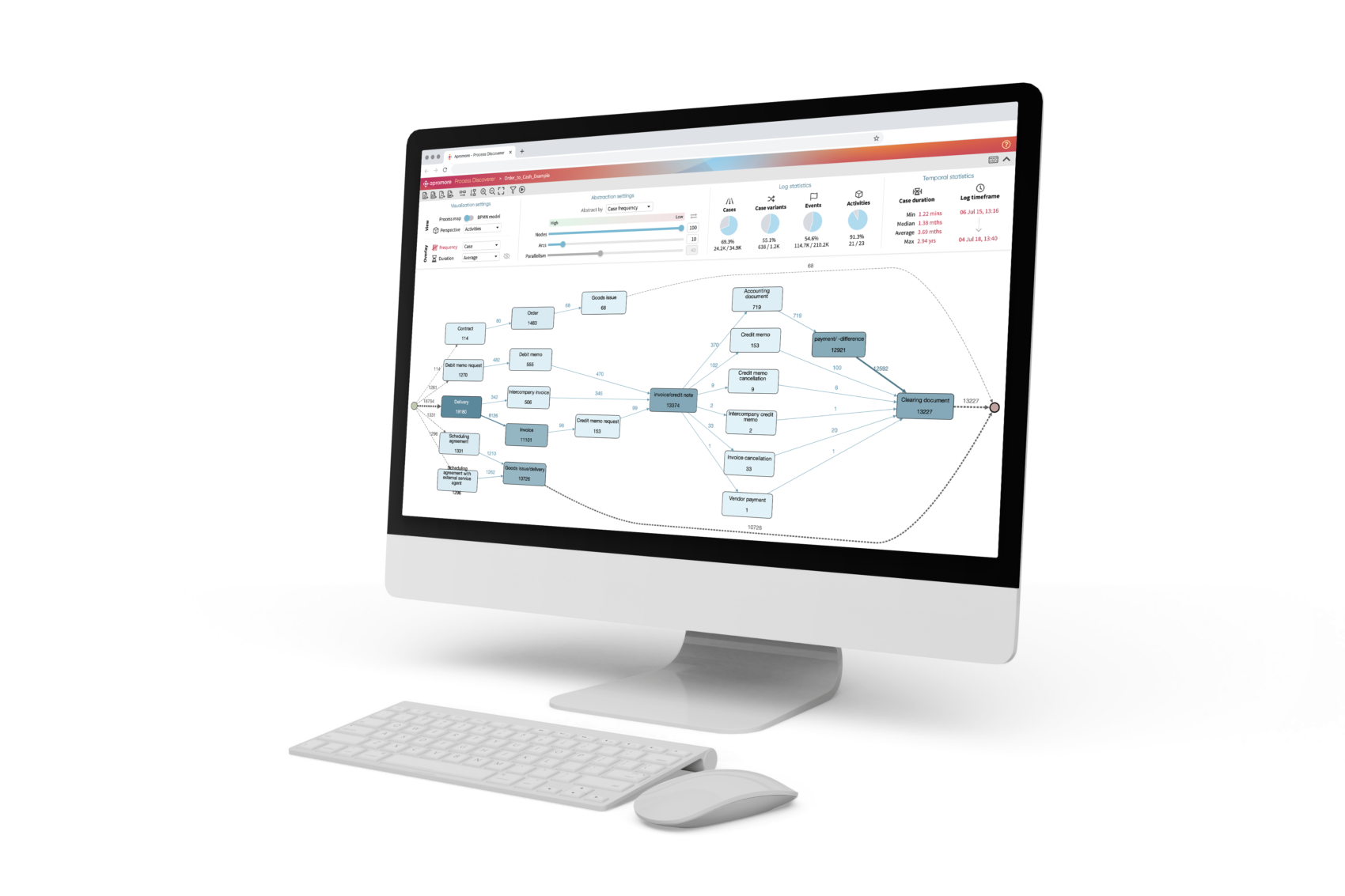
All companies generate data, but only leaders harness its full potential. Process mining automates business process discovery and analysis to give you an accurate picture of your operations and pinpoint frictions. Support data-driven decision-making for better business performance and quickly adapt to market changes.


Why Apromore?
A pure process mining focus means we combine the most advanced process mining capabilities with intuitive design to unlock business value. Data comes from a wide range of applications and systems - not just a single ERP or CRM system. Our flexible pricing enables a value-driven pathway and lower Total Cost of Ownership (TCO) for process mining adoption.
Get started: from raw data to business value in five steps

1. Connect
When you connect Apromore to your organization’s IT systems, it automatically collects transactional data from the digital footprint left by your processes.
2. Visualize
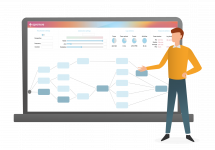
Apromore then creates a visual model of how your processes work – clearly showing what is being done, in what order and by whom.

3. Analyze
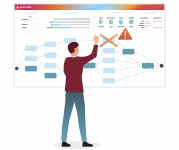
Our advanced analysis capabilities then detect weak spots such as bottlenecks and SLA violations, and areas for improvement, based on your KPIs.
4. Optimize
Using this evidence, you can simulate different interventions, identify the most beneficial ones based on impact, and optimize your processes accordingly.
5. Monitor
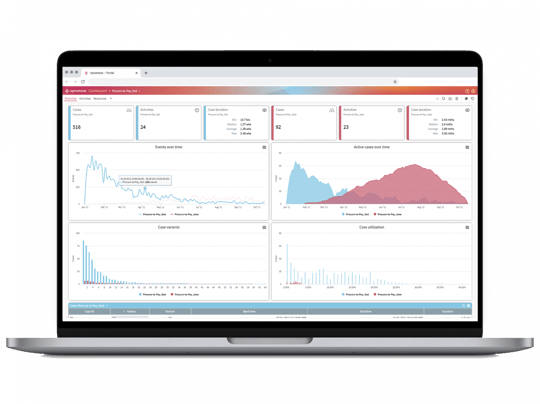
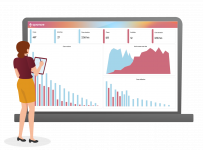
Once optimized, come back to Apromore to monitor the performance of your processes and predict possible deviations from the expected KPIs.
Hear from our customers!

“In an age where services are digital, a disconnect between IT and business operations was no longer tolerable. With process mining as our strategic asset, we gained a high level of digital maturity.”

“Using Apromore has been instrumental to start our journey towards adopting process mining. Its functionality is extremely comprehensive and enables us to perform in-depth and precise analyses.”

“The insights we attained from Apromore enabled us to make improvements, leading to higher efficiency. We got an accurate picture of what was happening rather than what we perceived was happening.”

“We pioneered Apromore’s use in Italy when it was still in its infancy. In 4 years, we've run 30+ consultancy projects with Apromore and certified 15 consultants. Extremely happy with our choice.”
“Apromore enabled us to analyze a range of business processes in an unbiased way. Ultimately, this enabled us to provide more effective and convincing project deliverables to our clients.”

“Apromore significantly improves the ability to generate alerts and to correct deviations that might occur in ongoing processes. I am fascinated with Apromore’s ability to constantly ‘learn’.”
The latest from our newsroom



Apromore Releases New Tools for Business Analysts and Lean Professionals to Track Degradations in KPIs and Drill Down into Root Causes
Press Release:
Learn more
Apromore Announces Seamless Integration with MuleSoft RPA Manager
Press Release:
Learn more
Kerner Norland Joins Forces with Apromore to Deliver AI-Driven Process Optimization in APAC
Kerner Norland (KN) and Apromore have embarked on a strategic partnership to help enterprises gain…
Learn more
Apromore Announces New Capabilities for AI-Driven Process Optimization
Press Release:
Learn more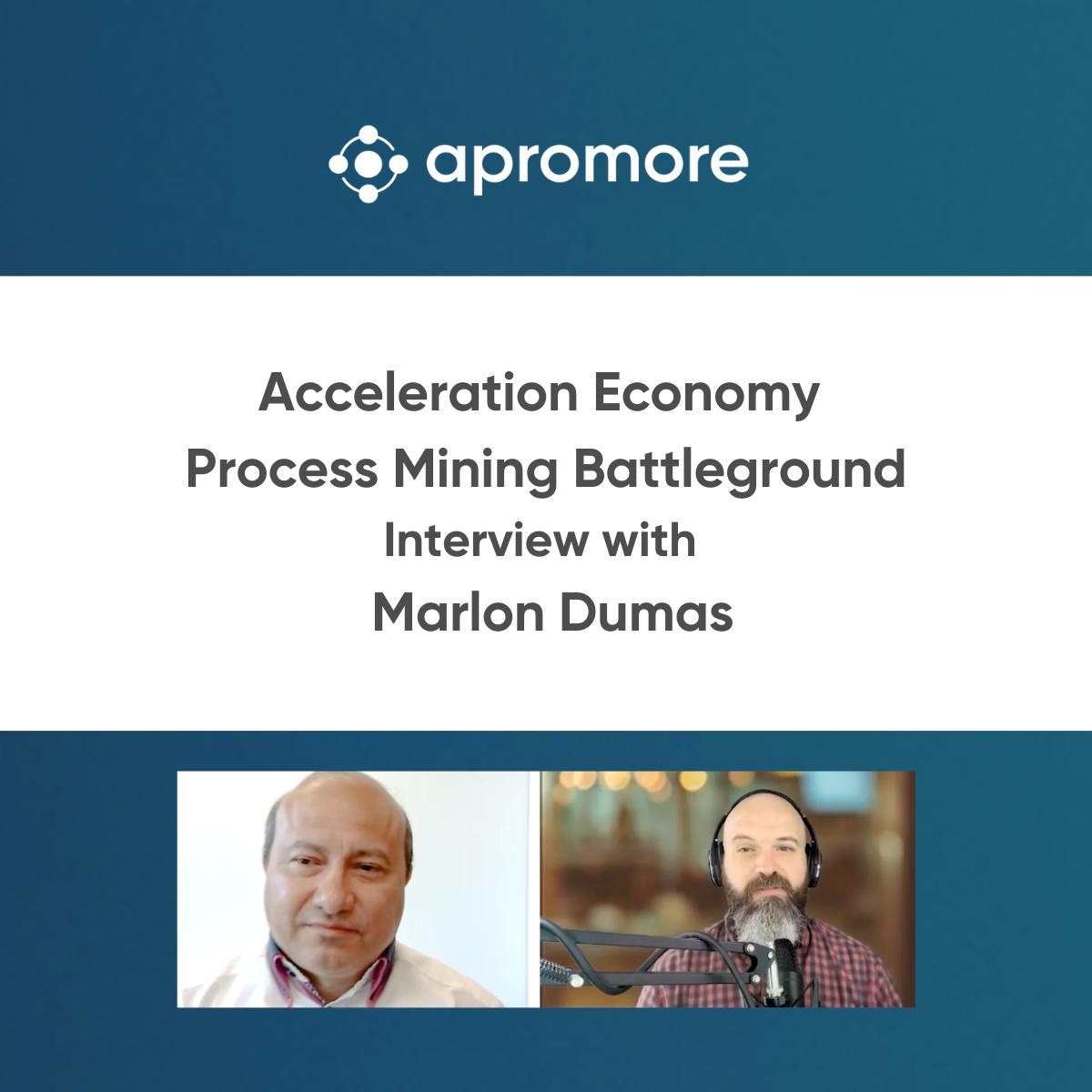
Process Mining Battleground: Interview with Apromore’s Co-Founder Marlon Dumas
When it comes to digital transformation and choosing the right technology, business leaders, CEOs,…
Learn more
Apromore at Salesforce World Tour London
Heading to Salesforce World Tour London?
Learn more
Apromore at Salesforce World Tour New York
Heading to Salesforce World Tour New York?
Learn more








































Questions?
Ask an expert.

Get a personalized demo to see how Apromore can work for you.